

The digital marketing world is currently buzzing with a provocative claim: “SEO is dead; GEO (Generative Engine Optimization) is the new king.” While it makes for a great headline, this narrative is largely a marketing tactic designed to repackage foundational principles as a “new” product to sell.

While the interface of search may change, the underlying logic remains constant. GEO still draws its power from established SEO fundamentals. Success in this ‘new’ landscape continues to depend on the strength of your content, the health of your technical setup, and your local presence via Google Maps and Google Business Profile.
Why SEO Fundamentals Still Rule in a GEO World
Generative AI models like Gemini or Search Generative Experience (SGE) don’t pull information out of thin air. They crawl the web, just like traditional search engines, and they substantantially prioritize the same signals:
- Rule of One: Each piece of content must still target one unique primary keyword to avoid competing with itself.
- Structured Data: AI needs structured, scannable content (like our Table of Contents and Bullet Points) to understand the context of a page.
- Local Authority: For a generative engine to recommend a business, that business needs a robust Google Business Profile and accurate location data—classic local SEO.
- Citations and Trust: Just as we use footnotes to cite sources, AI models prioritize information that is backed by high-authority external links and clear references.
The SEO-to-GEO Checklist
To ensure your content remains visible—whether in a standard search result or an AI-generated summary—stick to these core principles:
| Element | Requirement | Why it Matters for GEO |
|---|---|---|
| Primary Keyword | Unique per URL (Rule of One) | Prevents AI confusion. |
| Slug | Primary keyword only | Clean URL structure aids crawling. |
| SEO Score | 90+ on RankMath/Yoast | Ensures technical “health” for AI. |
| Alt Text | Descriptive with keywords | Helps AI “see” your images. |
| Internal Links | Anchor text = Destination keyword | Maps your site’s authority for AI. |
| Google Maps | Accurate map coordinates & NAP consistency | Provides geographic signals AI needs for “near me” recommendations. |
| Google Business Profile | 100% completed profile with active weekly posts | Serves as the primary “trust anchor” for AI to verify business legitimacy. |
| Reviews & Ratings | High star rating + keywords in review text | AI synthesizes customer sentiment and specific service mentions for summaries. |
The Evolution, Not the End
It is a common cycle in digital marketing: a new term emerges, and suddenly, the “old way” is declared dead. However, if you look beneath the surface of Generative Engine Optimization (GEO), you will find that it isn’t a replacement for SEO; it is a sophisticated evolution of how search engines display the data you provide.
In the past, SEO was often about helping a search engine match a user’s query to a specific page. Today, GEO is about helping an AI model synthesize your information into a comprehensive answer. While the delivery format has changed, the requirements for success remain rooted in the same core pillars.
The Bridge Between Traditional SEO and GEO
To understand why SEO fundamentals are still the heartbeat of GEO, consider how these “new” generative results are built. They don’t appear by magic—they are the result of AI models crawling, parsing, and ranking your data based on established signals.
- Relevant Titles Over Keyword Stuffing: A relevant, descriptive title is more than just a label. In the era of GEO, it is a primary signal that tells an AI model exactly what problem your content solves. If your title is vague or misleading, the AI cannot confidently include your content in its summary.
- Concise Structure and Formatting: Just as SEO experts have long championed H2 and H3 tags, GEO rewards highly structured content. AI models prefer data that is easy to extract—such as bullet points, numbered lists, and tables.
- High-Value Internal Linking: Internal links have always been used to pass authority. In GEO, they serve as a roadmap, helping search engines understand the relationship between different topics on your site and establishing you as a topical authority.
- Verified Local Authority via Google Business Profile: AI-driven local discovery relies heavily on verified data from Google Maps and Google Business Profile. Generative engines use these profiles to verify your location, operating hours, and customer sentiment through reviews to decide if your business is “cite-worthy” for “near me” queries.
Proof: Why Ethical SEO is the Bedrock of GEO
There is a common misconception that you must choose between ranking on Google and being cited by AI. In reality, the two are deeply intertwined. Ethical, “white-hat” SEO is the most effective way to ensure your brand is visible in generative results.
Recent data analysis reveals a powerful correlation: traditional search rankings remain a dominant factor in determining which sources an AI chooses to cite.
- 94% of AI Overviews cite ranked content. Nearly all AI summaries include at least one URL from Google’s top 20 search results. (Source: seoclarity.net)
- The Top 10 Rule: Approximately 76% of AI Overview citations pull directly from Google’s top 10 organic results. (Source: ahrefs.com)
- Probability of Citation. If you rank #1 on Google, you have a 33.07% to 43% chance of being cited by an AI summary—nearly double the chance of those lower in the top 10. (Source: getpassionfruit.com)
- Mentions > Backlinks. Branded web mentions (linked or unlinked) show a 0.664 correlation with AI visibility, outperforming traditional backlinks (0.218). (Source: ahrefs.com)
- Google Business Profile Impact. AI enhances hyperlocal results down to a few blocks; Google’s AI now interprets review sentiment and GBP attributes to verify “cite-worthy” local businesses. (Source: mapranks.com)
As shown in tools like Ahrefs, sites with strong domain authority and clear keyword structures provide the “truth signals” AI engines crave. When you optimize for users through fast load times, mobile-first design, and factual precision, you aren’t just doing SEO—you are building the verified foundation that allows GEO to exist.
The Shift from Clicks to Citations
AI Is Not Built for Traffic
There is a hard truth that every digital marketer must eventually face: Generative AI is not inherently designed to drive traffic to your website.. Traditional search engines act like a librarian pointing you toward a shelf of books; generative search acts like a librarian who reads the books for you and summarizes the answer right at the desk.
In this “zero-click” era, the primary goal of an AI engine is to satisfy the user’s intent immediately on the results page, often making a visit to the original source unnecessary.
The Reality of “Zero-Click” Search
The rise of AI summaries and chat-based interfaces has fundamentally altered the path of the user journey:
- The “Link Click” Decline: When a user receives a complete, synthesized answer, the need to click a link is removed. Studies have shown that click-through rates (CTR) can drop by 20% to 40% for informational queries.
- Synthesis Over Referral: AI models like Gemini and ChatGPT prioritize information retrieval and generation over referral. Their success is measured by how quickly they provide an answer, not by how many visitors they send to external sites.
- The “Ghost” Web: Users are still consuming your information, but they are doing so within the AI’s interface. You are providing the “fuel” for the answer, even if you aren’t receiving the “visit”.
Optimization for Citation, Not Just Clicks
If the old goal was a “click,” the new goal is a citation. While AI might not send a high volume of traffic, being cited as the source of its answer is critical for two reasons:
- Trust and Branding: Even without a click, your brand name appearing as a cited source builds authority and trust with the user.
- High-Intent Referrals: While raw traffic numbers may fall, the visitors who do click through from an AI citation are often much further along in their journey. These users are looking for deeper data, verification, or a specific service, resulting in significantly higher conversion rates.
The Strategy: Evolve or Fade
Ignoring GEO because it doesn’t promise massive traffic is a mistake. If your brand is not included in the AI’s synthesized answer, you effectively do not exist in that conversation. Success in 2026 requires shifting your focus from “raw hits” to “brand visibility inside the answer.”.
Evidence from the Field
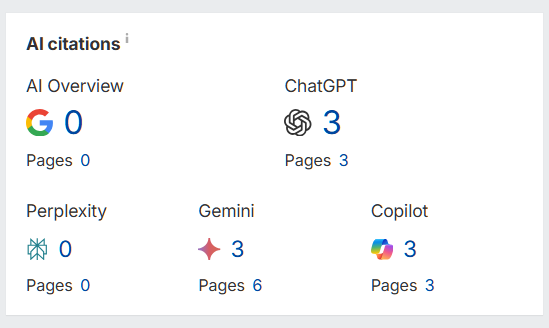
Ahrefs and Semrush data confirm that high-quality backlink profiles and diverse referring domains are no longer just for rankings. They serve as a “trust graph” for AI. An Ahrefs analysis found that brand web mentions show a strong correlation coefficient of 0.664 with AI visibility, proving that the authority you build off-site through traditional SEO is exactly what teaches LLMs to trust your brand.
Why the “Hype” is Misleading
The hype surrounding GEO often suggests that you need to throw away your SEO playbook and start over. This is simply not true. If you ignore the fundamentals—such as maintaining concise sentence lengths, optimizing your site speed, and ensuring mobile responsiveness—you won’t rank in GEO or anywhere else.
The “engine” is still SEO; the “display” is simply becoming more conversational. By focusing on the timeless principles of providing value, clarity, and authority, you ensure that your content remains visible regardless of whether a user is looking at a list of blue links or an AI-generated paragraph.
The Future: Will SEO Fundamentals Remain the “Source of Truth”?
While the current shift toward Generative Engine Optimization (GEO) suggests that SEO fundamentals are its primary building blocks, it is essential to acknowledge that search is in a state of rapid transformation. We are presently in an era where “good SEO” happens to be “good GEO,” but the trajectory of this evolution is not fixed.
A Transition in Progress
The realization that SEO has evolved into GEO is accurate for the time being. However, as AI models become more autonomous and “agentic,” the signals they prioritize may eventually diverge from traditional SEO.
- Uncertain Longevity: While technical hygiene and high-quality content are foundational now, we cannot predict with absolute certainty how well these specific signals will hold true as AI matures.
- The Rise of New Signals: We are already seeing brand mentions and “co-citations” across the web (like on Reddit or niche forums) carry more weight for AI than traditional backlinks alone.
- From Keywords to Intent: The focus is already shifting from isolated keywords to deep semantic understanding and conversational intent.
Why the Foundation Still Matters Today
Even with an uncertain future, the fundamentals remain your best insurance policy. AI models still require structured, fast, and authoritative data to learn from. By adhering to these principles now, you ensure your content is part of the “training set” that AI uses to form its answers.
The evolution of search is a marathon, not a sprint. While we may not know exactly what the “source of truth” will look like in three (3) years, the brands that prioritize human value and technical excellence today will be the best positioned to adapt to whatever comes next.
Stop Chasing Hype, Start Building Authority
GEO is not a replacement for SEO. It is an evolution of how search engines interpret and display the data you provide. If you ignore the fundamentals—such as crafting clear, relevant titles, maintaining concise sentence lengths, and building high-value internal links—you will fail to rank in generative engines and traditional search alike.
A relevant, descriptive title is more than just a label; it is a signal that tells an AI model exactly what problem your content solves. Without these structural anchors, your content becomes invisible to the crawlers that feed the generative “brain.”
Don’t be distracted by the rebranding. Focus on providing informative, contextual, and structured content that serves the user. That is how you win in 2026, regardless of what the latest “guru” calls it.
Need Help Navigating the Evolution of Search?
Adapting your website to the era of AI doesn’t require “magic”—it requires a mastery of the fundamentals. If you want to ensure your business stays visible in both traditional search and AI overviews, we can help.
Explore our Digital Marketing Services to see how we can build a future-proof SEO strategy for your brand.