

Static imagery has dominated digital content for over a decade, but the shift toward motion-based storytelling is accelerating across every creative discipline. Social platforms prioritize video in their algorithms. Audiences engage longer with dynamic visuals. Brands see measurably higher conversion rates when product images come to life.
Yet the gap between having compelling photographs and producing polished video content remains wide for most creators and businesses. The production expertise, software proficiency, and time investment traditionally required to bridge that gap have kept video out of reach for many who already possess strong visual assets.
Bridging the Gap Between Photography and Video
The emergence of AI-powered image-to-video generation has introduced a practical bridge across this production divide. Rather than requiring creators to learn video editing software or hire production specialists, these tools accept existing photographs as input and generate polished motion content directly.

Pollo AI’s platform to convert photos to videos represents a particularly mature implementation of this approach. The platform aggregates multiple advanced AI generation models, allowing users to transform still images into high-definition video sequences that preserve the original composition’s detail and visual integrity. What distinguishes this from simple pan-and-zoom animation is the sophistication of the generated motion—elements within the frame move with naturalistic physics, lighting shifts coherently, and the resulting footage carries the visual weight of intentionally produced video rather than automated slideshow effects.
The platform’s automatic scoring and sound design layer adds another dimension that traditional image animation tools lack. Generated videos receive cinema-grade musical accompaniment and ambient sound effects synchronized to the visual rhythm, producing content that feels complete without requiring the creator to source, license, and manually sync audio tracks. For creators whose strength lies in visual composition rather than audio production, this integration eliminates a significant production barrier.
Practical Workflow: From Static Image to Published Video
Implementing image-to-video generation effectively requires a structured approach that maximizes output quality while maintaining efficient production rhythms.
Step One: Curate Your Source Material Strategically
Not every photograph translates equally well into compelling video. Images with strong compositional depth, clear subject-background separation, and inherent visual narrative tend to produce the most engaging results. A portrait with soft background bokeh gains beautiful depth when animated. A landscape with layered foreground, midground, and background elements creates natural parallax motion. A product shot with dramatic lighting develops cinematic quality when light and shadow begin to shift.
Review your image library with motion potential in mind. Identify images where adding movement would enhance rather than distract from the visual story. Prioritize images with strong emotional or commercial value—hero shots for campaigns, signature portfolio pieces, or high-performing social content that could gain renewed engagement in video format.
Step Two: Optimize Source Image Quality
The quality of your input image directly determines the quality of the generated video output. Images with soft focus, compression artifacts, or insufficient resolution will produce video that amplifies these limitations rather than concealing them.
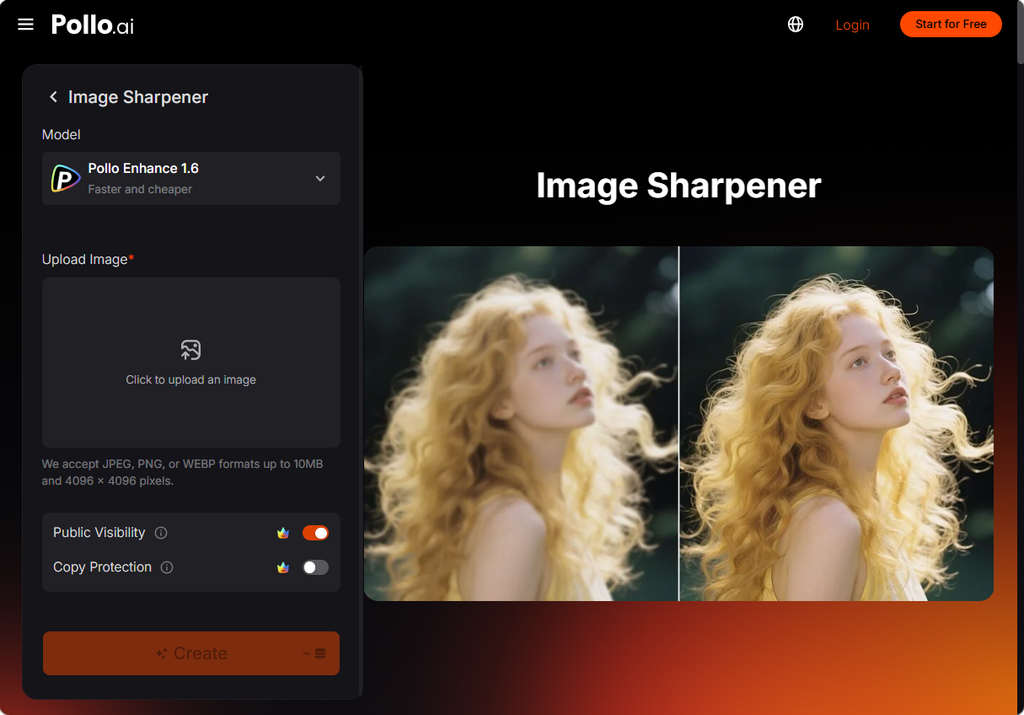
For source images that fall slightly below optimal quality, Pollo AI’s capability to sharpen image online provides a practical preprocessing step. The tool enhances detail clarity and restores resolution depth in photographs that may have been compressed for web use or captured in challenging conditions. A product photograph that appears acceptably sharp as a static image may reveal softness when animated—running it through the sharpening tool before video generation ensures the motion output maintains professional-grade clarity throughout.
This preprocessing discipline becomes especially important when working with older archived photography, vendor-supplied product images, or user-generated content that carries authentic value but lacks technical polish.
Step Three: Generate and Evaluate Multiple Variations
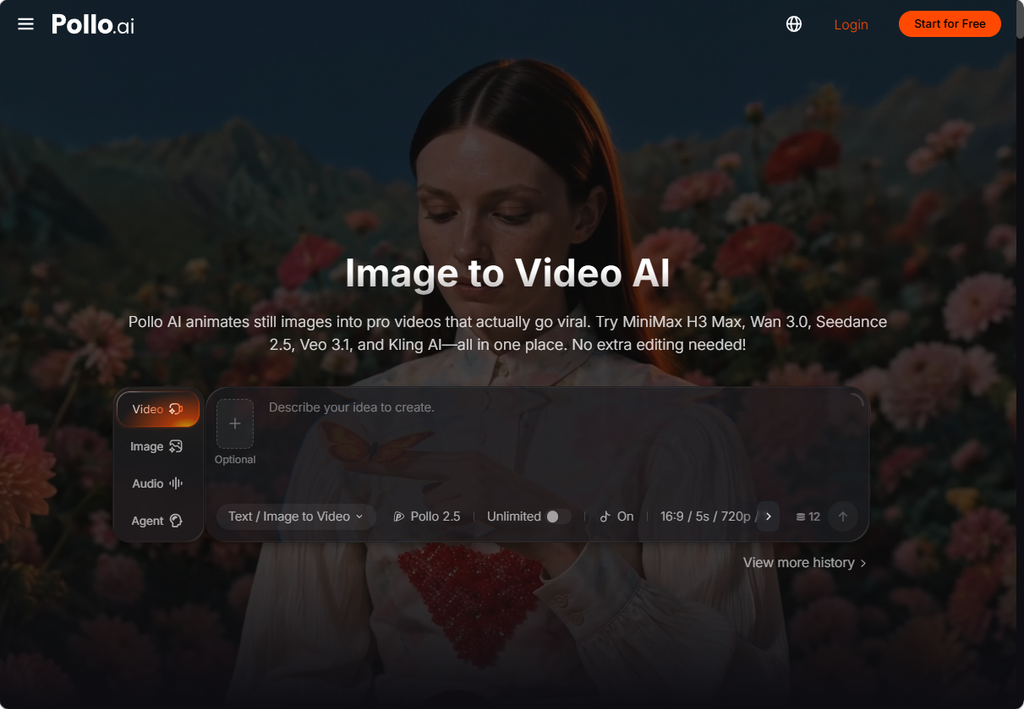
When using Pollo AI to convert photos to videos, generate two to three variations of each source image to explore different motion interpretations. The platform’s multi-model architecture means different generation approaches may emphasize different aspects of the same image—one variation might feature subtle camera drift while another introduces environmental motion within the scene.
Review these variations for emotional impact and narrative coherence rather than technical perfection alone. The most effective image-to-video conversions are those where the added motion feels intentional and enhances the story the original photograph was telling.
Step Four: Deploy Across Channels and Formats
Generated videos serve multiple distribution purposes without requiring additional editing. A single converted image can provide content for Instagram Reels, TikTok posts, YouTube Shorts, website hero sections, and email campaign headers. The cinematic audio integration means each piece arrives ready for publication on sound-enabled platforms, while the visual quality supports silent autoplay on platforms where sound is optional.
Building a Sustainable Content Multiplication Strategy
The long-term value of image-to-video conversion lies not in individual pieces but in the systematic multiplication of existing visual assets. Creators and brands who develop repeatable workflows for converting their strongest imagery into video content effectively double the utility of every photograph they produce or commission.
This multiplication effect compounds over time. A brand that converts twenty product images per month into video content accumulates a substantial video library within a single quarter—content that continues generating engagement and commercial value long after the original photography session.
For creators managing the quality of source materials across diverse shoots and conditions, Pollo AI’s ability to sharpen image online ensures consistency in the video generation pipeline. Images captured across different cameras, lighting conditions, and compression histories can be normalized to a consistent quality standard before conversion, producing a video library with uniform visual polish regardless of source material variability.
The most disciplined practitioners establish monthly conversion cycles aligned with their content calendars, systematically identifying high-potential images from recent work and converting them into video assets that extend the reach and engagement of their visual storytelling across every active platform.
Conclusion
The transition from static to dynamic visual content is not a trend—it is a structural shift in how audiences consume and engage with visual media. Creators and brands who possess strong photographic assets are sitting on untapped potential that image-to-video conversion tools can unlock without requiring new production skills or significant additional investment. Pollo AI’s platform to convert photos to videos provides the practical infrastructure for this transition, transforming existing photography into polished, sound-designed video content that meets the engagement expectations of modern digital platforms. For visual creators ready to extend the impact of their strongest work, the path from photograph to published video has never been more direct.