

In the brand-new data-driven setting, organizations are closely depending on green fact-speed processing to support analysis, reporting, and decision-making. Extract, transform, load (ETL) techniques play a significant role in gathering data from multiple resources, building the usable output, and watching it load out the data housing. The amount of data increases, companies often face overall performance bottlenecks that slow things down. This is where ETL technique optimization becomes important.
Optimizing ETL workflows helps organizations reduce processing time, adequately improve data, reduce operational costs, and ensure timely access to critical business enterprise insights.
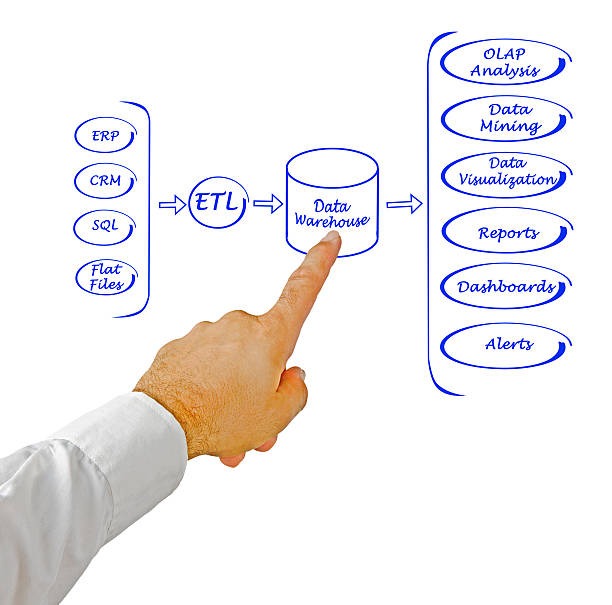
Understanding ETL Process Optimization
ETL process optimization refers to the practice of increasing the efficiency, speed, and reliability of ETL operations. This includes studying existing workflows, identifying performance targets, and implementing strategies that transfer and transform statistics nicely.
A well-optimized ETL engine allows companies to manage larger data sets while still maintaining accuracy and consistency. Scalability also helps when business statistics needs are held to magnification.
Why ETL Optimization Matters
As organizations produce and acquire more and more records, inefficient ETL workflows can negatively impact business operations. Slow data processing delays reporting, affects selection, and increases infrastructure costs.
Optimized ETL processes offer several benefits:
Faster Data Processing
Improved workflows reduce extraction, transformation, and load times, allowing organizations to access new data quickly.
Better Resource Utilization
Efficient ETL aggregate performance tuning reduces CPU, memory, and storage usage, resulting in lower operational costs.
Enhanced Data Quality
Optimization is often validation and error–dealing with improvements to ensure consistent and accurate data delivery.
Improved Scalability
Optimized statistical pipelines can manage the growth of data volumes without significant performance degradation.
Common Challenges in ETL Workflows
Many organizations have performance issues that limit the effectiveness of their data integration technology.
Large Data Volumes
Processing millions of entries can significantly increase execution time if workflows are not well designed.
Complex Data Transformations
Advanced business rules and more than one transformation step can eat up significant computing resources.
Inefficient Queries
Poorly written database queries typically cause bottlenecks throughout extraction and load operations.
Limited System Resources
Insufficient memory, CPU power, or garage throughput can affect normal ETL performance.
Key Strategies for ETL Process Optimization
Optimize Data Extraction
Instead of pulling entire data sets, take only the facts needed for the processing. Incremental load techniques allow organizations to process newly added or modified data as opposed to reprocessing all data.
This technique notably reduces workload and improves information processing.
Improve Data Transformation Techniques
Data transformation is usually the most useful and resource-intensive part of an ETL workflow. Simplifying good judgment about change and eliminating unnecessary calculations can increase performance.
Using efficient data transformation strategies reduces processing time and reduces useful resource consumption.
Implement Parallel Processing
Running a couple of ETL warranties simultaneously can significantly reduce the typical execution time. Parallel processing allows organizations to use available hardware resources more efficiently.
This method is particularly useful for large record ETL environments where large data sets require good size processing.
Use Proper Indexing
Database indexing can reduce query execution time and improve extraction and retrieval performance. Strategic indexing allows ETL systems to retrieve records more efficiently.
However, excessive indexing should be avoided, as this may again reduce the statistical retrieval system.
Optimize Data Loading
Bulk loading techniques are often faster than row-by-row insertion techniques. Disabling unnecessary constraints and indexes during the course of the loading operation can likewise improve speed.
Once the load is complete, the indexes and constraints can be rebuilt as desired.
ETL Performance Tuning Best Practices
Monitor Workflow Performance
Monitoring continually makes it easy to understand before they generate major problems. Performance metrics that include execution time, helper utilization, and error rates provide valuable insights.
Automate ETL Processes
Automated ETL processes reduce manual intervention and increase consistency. Scheduling tools and workflow orchestration structures help streamline the transfer of statistics across entire structures.
Minimize Data Movement
Reducing redundant data transfers in systems reduces network costs and improves general efficiency.
Leverage Data Partitioning
Partitioning large datasets allows ETL jobs to technique small chunks of data independently, increasing overall performance and scalability.
Data Pipeline Optimization for Modern Businesses
Modern groups increasingly rely on inventory management optimization to aid real-time analytics and business intelligence projects. Optimized routing allows for faster slab delivery and increases the overall performance of the slab warehouse.
Cloud-first-based ETL solutions have also added new opportunities for scalability and automation. Using cloud sources, organizations can dynamically allocate computing power based on workload needs.
The Role of ETL Optimization in Data Warehousing
Data warehouses serve as the foundation of business business intelligence and reporting systems. Poor ETL overall performance can affect record storage performance and user experience at once.
Optimized ETL workflows ensure that information warehouses receive accurate, up-to-date information at the same time to maintain high performance. This allows analysts and option makers to gain insights without delay.
Future Trends in ETL Optimization
The future of ETL optimization is being built through automation, artificial intelligence, and cloud-native technologies. Intelligent ETL platforms take on robotic bottlenecks, can advocate for additional processing, and optimize workflows in real time.
Organizations are also adopting low-code and no-code ETL solutions that simplify workflow management and maintain high-performance and scalability.
Conclusion
ETL process optimization is an important issue in current fact management strategies. As the volume of records increases, organizations need to be aware of enhancing ETL workflow optimization, improving fact-processing performance, and mandating ETL best practices to be aggressive.
By optimizing extraction methods, improving conversion methods, leveraging automation, and adopting scalable technologies, organizations can build higher visibility data pipelines that help with faster analytics, better selection, and long-term momentum