

Most marketing teams think of content as something that lives on screens—blog posts, videos, social media updates. But every vehicle your organization operates is already creating impressions, telling a story, and either reinforcing or undermining your brand. Fleet branding transforms that passive presence into active content marketing, turning trucks, vans, and specialty vehicles into mobile billboards that reach audiences where digital channels can’t.
The fundamental challenge is that most fleets are functionally invisible. A white van with a phone number does nothing to communicate expertise, values, or differentiation. It’s transportation, not communication. Effective fleet graphics change that equation by making every trip, every parking spot, and every job site an opportunity to deliver a brand message to people who aren’t actively searching for your services.
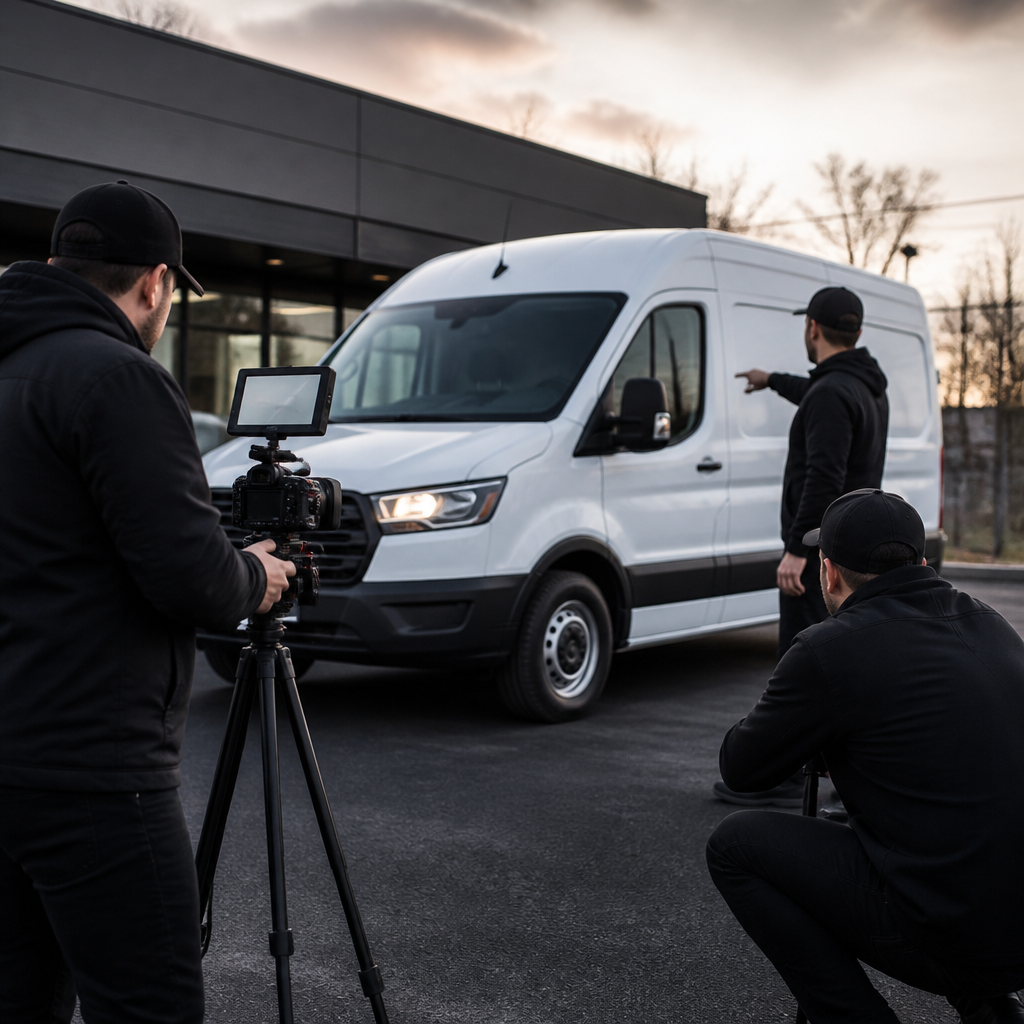
Why Vehicle Branding Functions as Content
Content marketing works by providing value, building recognition, and establishing authority over time. Fleet branding accomplishes the same goals through repeated physical exposure. A delivery van makes dozens of stops per day, each one placing your brand in front of pedestrians, adjacent businesses, and other drivers. Over a year, a single vehicle generates tens of thousands of impressions in the specific geographic areas where your customers live and work.
This is fundamentally different from static advertising. A billboard is tied to one location; a vehicle moves through neighborhoods, business districts, and job sites, creating a perception of presence and activity. For service-based businesses—contractors, healthcare providers, logistics companies—that visible presence is itself a message: we’re here, we’re busy, we’re part of this community.
The content isn’t just the logo. It’s the professionalism of the design, the clarity of the information, the decision about what to emphasize. A well-designed wrap communicates that your organization invests in quality and thinks about how it presents itself. A poorly executed or outdated wrap does the opposite, suggesting neglect or financial strain.
Strategic Approaches to Fleet Graphics
The most effective fleet branding aligns with the broader content strategy rather than functioning as standalone design. If your content marketing emphasizes speed and reliability, your vehicles should visually reinforce that message through clean lines, bold type, and service promises. If you’re positioning around expertise or specialization, the graphics should reflect technical credibility—detailed service lists, certifications, or imagery that demonstrates capability.
Consistency across the fleet is critical. A mixed fleet with inconsistent branding creates confusion about whether vehicles belong to the same organization, especially if some are wrapped and others carry only vinyl lettering or outdated designs. The goal is to create a recognizable visual system that works across different vehicle types—cargo vans, pickup trucks, box trucks, trailers—without requiring identical layouts.
Messaging Hierarchy and Readability
Fleet graphics are consumed in seconds, often while both the vehicle and viewer are in motion. The design must prioritize a clear hierarchy: company name and primary service at the largest scale, contact information and secondary details at a readable but subordinate size. Many wraps fail because they try to communicate too much, resulting in dense layouts that can’t be processed quickly.
Phone numbers and web addresses should be large enough to read from at least 50 feet. QR codes are increasingly common but should be treated as supplementary—useful when the vehicle is parked, irrelevant when it’s moving. The most important content is the name and the core service or value proposition, ideally summarized in three to five words.
Specialty Vehicles as Branded Content Platforms
Beyond standard fleet graphics, some organizations are investing in purpose-built vehicles designed to deliver services while simultaneously functioning as high-impact branded content. Mobile medical units, for example, extend healthcare access into underserved areas while creating highly visible evidence of a provider’s community commitment. Healthcare organizations are increasingly deploying mobile clinics to provide primary care, vaccination services, and screening programs in neighborhoods that lack convenient access to traditional facilities.
These vehicles do more than transport services—they create moments. A mobile clinic parked outside a community center or a mobile retail experience stationed at a festival generates foot traffic, social media content, and word-of-mouth in ways that fixed locations cannot. The vehicle itself becomes the story, a tangible demonstration of organizational values and operational capability.
Marketing teams use similar mobile platforms for product launches, sampling campaigns, and experiential activations. A branded vehicle designed for customer interaction—equipped with product displays, demonstration areas, or digital screens—functions as both a content delivery system and a content subject. Attendees photograph it, share it, and associate the brand with innovation and accessibility.
Implementing Fleet Branding as Part of Content Strategy
Organizations looking to integrate fleet branding into their content marketing approach should start by auditing the current state of their vehicles. How many are on the road? What routes do they travel, and who sees them? What condition are existing graphics in, and what message—intentional or not—are they currently sending?
From there, the process mirrors any content project: define objectives, clarify audience, develop messaging, and design assets that deliver both. For businesses with diverse service lines or multiple brands under one corporate umbrella, decisions about whether to use unified branding or distinct identities across the fleet have significant strategic implications. A construction company might brand equipment vehicles with project capabilities while branding service trucks with emergency response messaging, each targeting different customer needs.
Execution quality matters enormously. Poorly applied vinyl wraps with visible bubbles, wrinkles, or misaligned panels undermine the intended message. Professional fabrication companies that specialize in custom fleet wrap branding ensure that designs are properly adapted to vehicle contours, that materials are rated for multi-year outdoor exposure, and that installation meets standards for durability and appearance. The investment in quality execution protects the content marketing value of the fleet over its usable life, typically three to five years depending on mileage and environmental exposure.
Measuring Impact and Return
Unlike digital content, fleet branding doesn’t generate clickthrough rates or session durations, which makes some marketing teams hesitant to invest. But impact can be tracked through proxy metrics: increases in direct traffic to the website following a fleet rebrand, changes in the geographic distribution of inbound leads, or customer surveys that ask how people first heard about the company.
Phone tracking numbers unique to vehicle graphics provide direct attribution. If the number displayed on your trucks differs from the one on your website or in paid ads, inbound calls to that number are directly attributable to fleet visibility. For businesses with predictable service areas, mapping lead origins against fleet routes can reveal correlation between vehicle presence and customer acquisition.
Long-Term Value and Brand Equity
Fleet branding is not a campaign with a defined end date. Once implemented, it generates value continuously for as long as the vehicles remain in service. A single van might accumulate a million impressions over three years, all without recurring media costs. That enduring presence builds the kind of ambient brand awareness that makes other marketing efforts more effective—people are more likely to click an ad or engage with content from a brand they’ve seen around town.
For organizations operating in competitive local markets, fleet branding also creates a perception of scale. A company with ten branded vehicles on the road appears larger and more established than a competitor with equivalent capacity but unmarked trucks. That perception influences trust, particularly in industries where customers are making high-stakes decisions about who to hire for construction, logistics, or specialized services.
The strategic lesson is that content marketing isn’t confined to content management systems and social platforms. Every branded touchpoint—including the vehicles your organization already operates—is an opportunity to communicate, differentiate, and build recognition. Fleet branding turns operational assets into marketing assets, ensuring that every mile driven contributes to the broader goal of staying visible and relevant in the markets you serve.